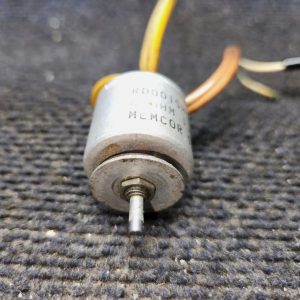
The Cessna 172F Rheostat (No Knob)
Whether buyers search for a Cessna 172F Rheostat, Cessna 172F Lighting Rheostat, or Cessna 172F Panel Light Rheostat, electrical compatibility and individual condition should guide the purchase.
Whether described as a Cessna 172F Cockpit Dimmer, Cessna 172F Instrument Light Control, Cessna Instrument Panel Rheostat, or Cessna Cockpit Lighting Control, exact circuit verification remains essential.
An Aircraft Lighting Rheostat may also serve as an Aircraft Panel Light Dimmer when its resistance, power rating, terminals, and control range match the intended installation.
Cessna 172F Electrical Parts, a Cessna 172F Dimmer Switch, Cessna Panel Lighting Control components, and a Cessna Aircraft Rheostat may be sourced together during a complete cockpit electrical project.
Why the Exact Rheostat Part Number Matters
Every letter, number, and suffix should be recorded because similar rheostats may differ in resistance, wattage, shaft style, terminal arrangement, dimensions, and operating characteristics.
The intended panel position and controlled lighting circuit should be established before installation.
Completing the Panel Lighting Control
The shaft diameter, length, shape, flat, spline, retaining method, and panel clearance should be measured before selecting a knob.
A restoration project may prioritize an original-style knob, while an active aircraft installation must also consider secure operation and accurate control identification.
Understanding Variable Panel Illumination
Some cockpit lighting systems may use additional switches, resistors, transformers, wiring, grounds, or circuit-protection devices.
Lighting problems can also result from lamps, wiring, grounds, connectors, circuit protection, or damaged panel components.
Cessna 172F Electrical Compatibility
The offered component should be read more compared with the removed rheostat, wiring diagram, panel opening, shaft style, and electrical specifications.
A component that fits physically may still have the wrong resistance range, power capability, or internal construction for the circuit.
Checking Mounting Threads and Control Movement
Inspection should begin with the component clean enough to reveal cracks, corrosion, heat discoloration, damaged threads, bent shafts, missing insulation, contamination, and previous repair.
Mounting threads, nuts, washers, anti-rotation features, and panel-contact surfaces should be examined for wear or damage.
Checking Panel Lighting Connections
Clear wiring records reduce reconnection errors.
Damaged terminals should not be bent repeatedly in an attempt to restore alignment.
Rheostat Resistance and Continuity Testing
Testing may include resistance measurement, continuity checks, smoothness evaluation, terminal mapping, and controlled functional testing appropriate to the identified component.
The component should not be connected directly to a power source until terminal functions and specifications are known.
Panel Light Control Failure Symptoms
The complete lighting system should be inspected before the rheostat is identified as the only failed component.
Technicians should compare circuit behavior at different control positions while monitoring wiring, terminals, lamps, grounds, and protection devices.
Original-Style Instrument Panel Controls
A Cessna 172F Rheostat can provide valuable restoration potential for owners preserving the appearance and function of an original-style cockpit.
A refurbished panel should avoid hidden wiring modifications, unsupported loads, or mismatched electrical parts.
Planning a Panel Lighting System Project
A missing knob or damaged connector can delay installation even when P/N RD0015H1600JBC is available.
Donor-aircraft history may provide context but does not establish present serviceability.
Restoring an Aircraft Lighting Control
The decision to repair or replace a rheostat depends on internal wear, heat damage, shaft condition, terminal integrity, corrosion, electrical performance, parts availability, and suitable repair information.
Opening the rheostat body without appropriate expertise can disturb internal contacts, insulation, windings, stops, seals, or calibration characteristics.
Evaluating a Used Aircraft Lighting Control
Untested or incomplete rheostats may still have restoration, repair-candidate, pattern, training, or reference value when described honestly.
Electrical ratings and dimensions should be supplied when verified.
Panel Light Dimmer Condition Checklist
The seller should provide photographs showing the housing, shaft, mounting threads, terminals, markings, attached wiring, damage, and repaired areas.
- Determine whether the knob, nut, washer, wiring connector, terminal hardware, test report, records, or release documents are included.
- Arrange qualified evaluation whenever specifications, electrical condition, repair quality, or installation suitability remain uncertain.
- Inspect and photograph the rheostat immediately after delivery before cleaning, testing, opening, repairing, wiring, mounting, or modifying it.
Rheostat Packaging Requirements
The shaft should not carry the weight of the component during shipment or storage.
Test records and identification information should remain associated with the component.
Installing the Cessna 172F Rheostat
The electrical system should be secured appropriately before the original control is disconnected.
The knob should attach securely without restricting the rheostat’s full control range.
After installation, technicians should verify control movement, lighting response, dimming range, terminal security, circuit protection, wiring temperature, and absence of flickering or dead spots.
Routine Panel Dimmer Inspection
Long-term maintenance includes checking control movement, knob security, mounting tightness, terminals, wiring, heat discoloration, corrosion, lighting response, and panel condition.
Recurring heat or failure should prompt investigation of circuit loading, wiring condition, lamps, grounds, and connected components.
Choosing the Cessna 172F Rheostat (No Knob)
The Cessna 172F Rheostat (No Knob)
The component should be judged according to complete electrical and installation suitability rather than clean appearance, Cessna association, smooth rotation, or purchase price alone.
Whether buyers need a Cessna 172F Instrument Light Control, Cessna Instrument Panel Rheostat, Cessna Cockpit Lighting Control, or Aircraft Lighting Rheostat, circuit-specific compatibility should be verified.
With responsible purchasing, part-number research, controlled testing, secure mounting, and preventive electrical maintenance, the rheostat can remain a valuable cockpit asset.